
Kalawao County Arrest Warrants Explained
HRS §803-1 sets the baseline for warrants and process, subject to legal exceptions. Under Hawaiʻi Rules of Penal Procedure Rule 3, a complaint, information, declaration, or affidavit goes to a judge for a probable-cause decision. Rule 9 then governs the warrant itself and its delivery to a police chief or another authorized person. These authorities describe process only. They create no public list of Kalawao County arrest warrants.
Kalawao Probable Cause Review
Probable cause is the factual basis for believing an offense occurred and that a named person is connected to it. It is not proof beyond a reasonable doubt. The judge reviews sworn or otherwise authorized material first. The complaint may later appear in the case file. An affidavit can stay sealed when disclosure would harm an investigation. The Hawaiʻi Rules of Penal Procedure lay out the official Rule 3 and Rule 9 framework that governs Kalawao County cases.
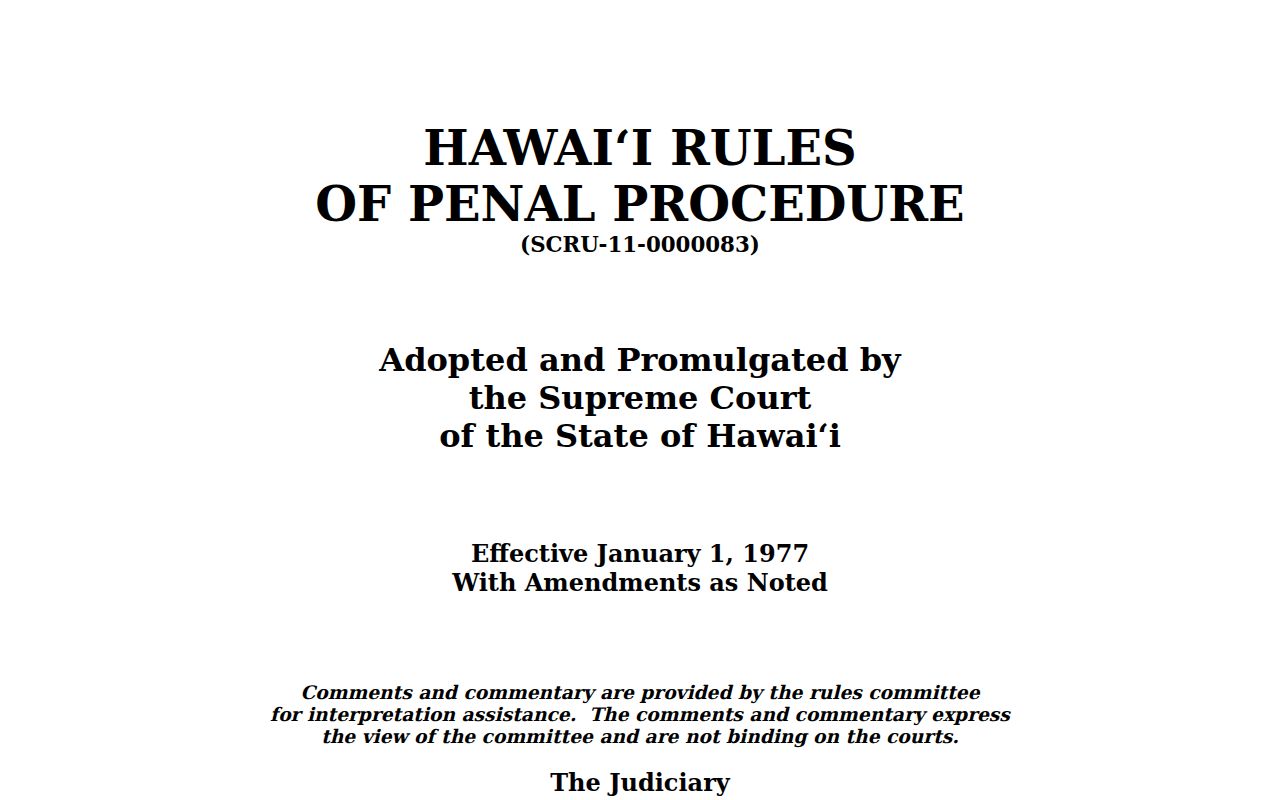
The rules also keep arrest-warrant procedure separate from Rule 41 search warrants, which authorize a Kalawao County search for evidence rather than custody of a person.
Inside a Kalawao Arrest Warrant
The public record varies case by case. A complaint, warrant, declaration, docket entry, service return, bail order, or later disposition may exist in a Kalawao County file. Some details can be redacted or sealed. Always match the case and court identifiers to avoid confusing people with similar names.
| Case or warrant ID | Identifier used to trace the exact court file. |
|---|---|
| Named person | The subject of the process, subject to identity checks and redaction. |
| Alleged offense | The accusation supporting process, not a finding of guilt. |
| Issuing court | The court controlling status and later orders. |
| Issue date | The date entered, not proof of current activity. |
| Bail or bond | Terms shown in an order and subject to later change. |
Search Kalawao Court Records
Hawaiʻi has no public statewide active-warrant search, so a Kalawao County warrant lookup starts with eCourt Kōkua, the Judiciary's public case-information system. Search by person, case ID, vehicle, or filing date when those fields fit. A case ID from a notice beats a common name for precision. Public detail can include court, status, events, dockets, offenses, bail or bond, and document icons. A blank result does not prove no warrant exists. Sealed, confidential, unfiled, and internal law-enforcement data may not appear, so confirm a suspected warrant with the Molokaʻi District Court or the appropriate Second Circuit clerk before appearing. If the online file lacks the document you need, Second Circuit forms support clerk searches, inspection, copies, and certification. Give the clerk a case ID when possible, plus the full name, case type, and document sought. A court request also differs from an MPD or DLE request under UIPA, because each custodian holds a different part of the Kalawao County record trail.
Serving Arrest Warrants in Kalawao County
The Hawaiʻi Department of Law Enforcement Sheriff Division serves process, provides court security, and handles prisoner transport. Its Maui Section can be reached at 808-244-2900. Maui Police Department's Molokaʻi Station, at 808-553-5355, is another local channel. Neither operates a public arrest-warrant database. HRS §604-13 says a warrant issued by a competent court may be pursued and an arrest made anywhere in Hawaiʻi, so leaving Kalawao County or Molokaʻi does not end it. Booking, a court appearance, and a release decision may follow an arrest. HRS §805-2 also addresses delivery of a complaint copy after the original is shown.
Kalawao Files May Stay Sealed
Public court access and internal warrant status are two different things in Kalawao County. eCourt Kōkua shows public indexed material, while the Second Circuit's electronic warrant workflow connects police, prosecutors, and judges internally. The 2024 Judiciary annual report notes Second Circuit e-warrants expanded to arrest and search warrants, including after-hours review. No live queue becomes public because of that. Under UIPA, HRS chapter 92F, privacy and law-enforcement interests can limit executive-branch records, while court access follows Judiciary rules and orders. If public detail is missing, ask the clerk whether a public copy or docket entry exists rather than demanding sealed investigative material. A narrow request works better than asking an agency to build a list. Identify the existing report, event, date range, or case reference, then ask for segregable public portions. An agency can redact protected details or cite a withholding basis. The Office of Information Practices offers an appeal route for executive-branch denials, but it cannot make sealed court material public in Kalawao County or anywhere else.
Comparing Arrest, Summons, and Bench Warrants
These documents call for different responses in Kalawao County. A summons directs appearance without immediate arrest authority. Ignoring it can lead to warrant process under Rule 9. A bench warrant usually arises from a court-related failure in an existing matter; the companion bench warrant search explains that route.
| Feature | Arrest Warrant | Summons | Bench Warrant |
|---|---|---|---|
| Direction | Take the person into custody | Appear as ordered | Arrest or return after a court failure |
| Basis | Probable cause | Notice to answer a matter | Nonappearance or noncompliance |
| Response | Counsel, surrender, bail, court | Appear on time | Ask about appearance or recall |
Identify the Kalawao Issuing Court
Kalawao County runs no court of its own. Its cases sit inside the Hawaiʻi State Judiciary's Second Circuit. That circuit covers Maui, Molokaʻi, Lānaʻi, Kahoʻolawe, and Molokini, with the Circuit Court handling serious criminal matters. Misdemeanors and traffic cases belong to District Court instead. On Molokaʻi, that means the Molokaʻi District Court at 55 Makaena Street in Kaunakakai. Its public number is 808-553-1100. The court file answers the most, so read the case caption, court location, and case ID carefully there. The Second Circuit Legal Documents Branch and the court clerks keep those files, with Hoapili Hale in Wailuku serving as the main Second Circuit courthouse and records route, so Kalawao County questions end up routed there rather than to a judge's chambers.
If There's an Arrest Warrant for You
Confirm the warrant with the court first. Then talk things through with a lawyer or the public defender handling Kalawao County matters. Counsel may arrange a planned surrender, bail, release on recognizance, or a motion to recall or quash. No single path is guaranteed, and release from custody does not end the underlying case.
- Record the case ID, issuing court, and source of the notice.
- Call the clerk using an official Judiciary number.
- Ask counsel about surrender, bail, and any motion.
- Keep the court order or docket entry showing the result.
Act carefully: An arrest warrant may be served statewide. Speak with counsel before arranging a voluntary appearance or surrender.
Avoid Kalawao Warrant Scams
Phone scammers target Kalawao County residents with warrant stories. Maui Police and DLE have both warned about callers who claim you have an outstanding warrant or missed jury duty, then demand payment on the spot. Never pay with gift cards, cryptocurrency, or a payment app. Never click a link the caller sends. Hang up instead. Then look up the office number on an official government page and call it yourself, because a badge number or a familiar agency name proves nothing. The DLE Sheriff Division is the real state channel, and only the issuing court can tell you a warrant's true status or change it through authorized process. Crime Stoppers is not a status search either. Maui County's program takes tips for investigators, but it does not certify that a warrant exists. No official public Kalawao County warrant roster has been posted through September 8, 2026, so independent court confirmation beats private aggregators, which may be stale, incomplete, or tied to the wrong person. When you verify a record in Kalawao County, keep the case ID, court name, full legal name, and last known docket date in front of you. Share personal identifiers only with the official clerk, your lawyer, or the agency handling the matter. Ask whether the file shows a return, recall, cancellation, or disposition after the first warrant event, since the newest court action can change what an older search result seemed to say.