
Kalawao County Active Warrants Explained
Kalawao County works differently from other counties. It is a quasi-county run under the Department of Health, not a conventional county with its own courthouse and sheriff. No sheriff, warrant unit, or public roster exists. In practice, the Circuit Court of the Second Circuit, along with its District and Family Court channels, handles the court work. That is where warrant questions land. An active or outstanding warrant simply means the issuing authority has not recorded it as recalled, canceled, served, or otherwise resolved. A docket can hint at that status. Only the source court can confirm what the official record actually says about a Kalawao County matter. Read no more into a court event than the record states.
No Kalawao County Outstanding Warrant Roster
The missing roster is itself the answer, not an opening for unofficial sites. Hawaiʻi's eCourt Kōkua carries public case information. Internal e-warrant systems are not public name-search lists. Neither Maui Police nor the State Sheriff Division posts a Kalawao County active-warrant database.
Key point: A name missing from eCourt Kōkua does not prove there is no warrant, and a docket entry alone may not prove current police status.
Find the case first. Call the right clerk. Ask which public record shows how the Kalawao County case ended, and steer clear of any commercial roster that names no government office.
How Kalawao County Tracks Active Warrants
Kalawao County warrant records live in several systems. The issuing court keeps the case file and its orders. The Hawaiʻi Department of Law Enforcement Sheriff Division serves process statewide. Maui Police hold reports, bookings, and operational data. Each source has its own purpose, index rules, and public limits. The 2024 Judiciary Annual Report describes the Second Circuit expanding electronic workflows for arrest warrants, search warrants, and juvenile petitions, with after-hours review by police, prosecutors, and judges. None of that creates a public roster. The report also notes Maui e-citation data-entry delays. Kalawao County readers should not expect a fixed refresh schedule.
Note: Public case data can lag issuance, service, or recall, so absence from an online view never guarantees that no warrant exists.
Kalawao County Court and Police Warrant Status
Court status and police status answer different questions. A court file may show a judge issuing a bench warrant, setting bail, receiving a return, or entering a recall. Police and sheriff systems track service work instead. That work rarely appears in the public docket. And the State Sheriff Division's process role does not turn its Maui phone into a Kalawao County lookup line.
| Source | What It May Show | Best Use |
|---|---|---|
| eCourt Kōkua | Public status, events, dockets, offenses, bail, and available documents | Find the case and issuing court. |
| Second Circuit clerk | Public orders, returns, copies, and dispositions | Verify the court record and procedure. |
| MPD or DLE | Releasable agency records, sometimes redacted or withheld | Request a specific existing record under UIPA. |
Inside an Active Warrant Record
Form 2DC03 from the Second Circuit offers the clearest field model. It is blank. It lists the State and court, arrestee name, birth date, limited identity fields, address, civil number, bench-warrant number, filing party or attorney, date ordered, judge, bail, command to arrest, and service information. A public Kalawao County copy may omit protected fields.
| Warrant Number | A court identifier, shown on the form as Bench-Warrant No.. |
|---|---|
| Issuing Court | The Second Circuit location or division responsible for the order. |
| Order and Reason | The date ordered and command, which may concern failure to appear or another duty. |
| Bail | An amount or condition set by the judge when applicable; verify current status. |
| Return or Service | Fields reporting execution, service, or another result to the court. |
Match the case ID and court, not the name. Kalawao County files may keep enforcement notes and location details out of public view.
Confirm Kalawao County Warrants Through Molokaʻi
Molokaʻi District Court is the closest rural channel for Kalawao County lower-court matters. It sits at 55 Makaena Street, Kaunakakai, Hawaiʻi 96748. The number is 808-553-1100. Ask whether the case belongs there, in another District Court division, in Circuit Court, or in Family Court. The official Second Circuit contact page posts the phone lines and court listings that answer that routing. It carries contact context only.
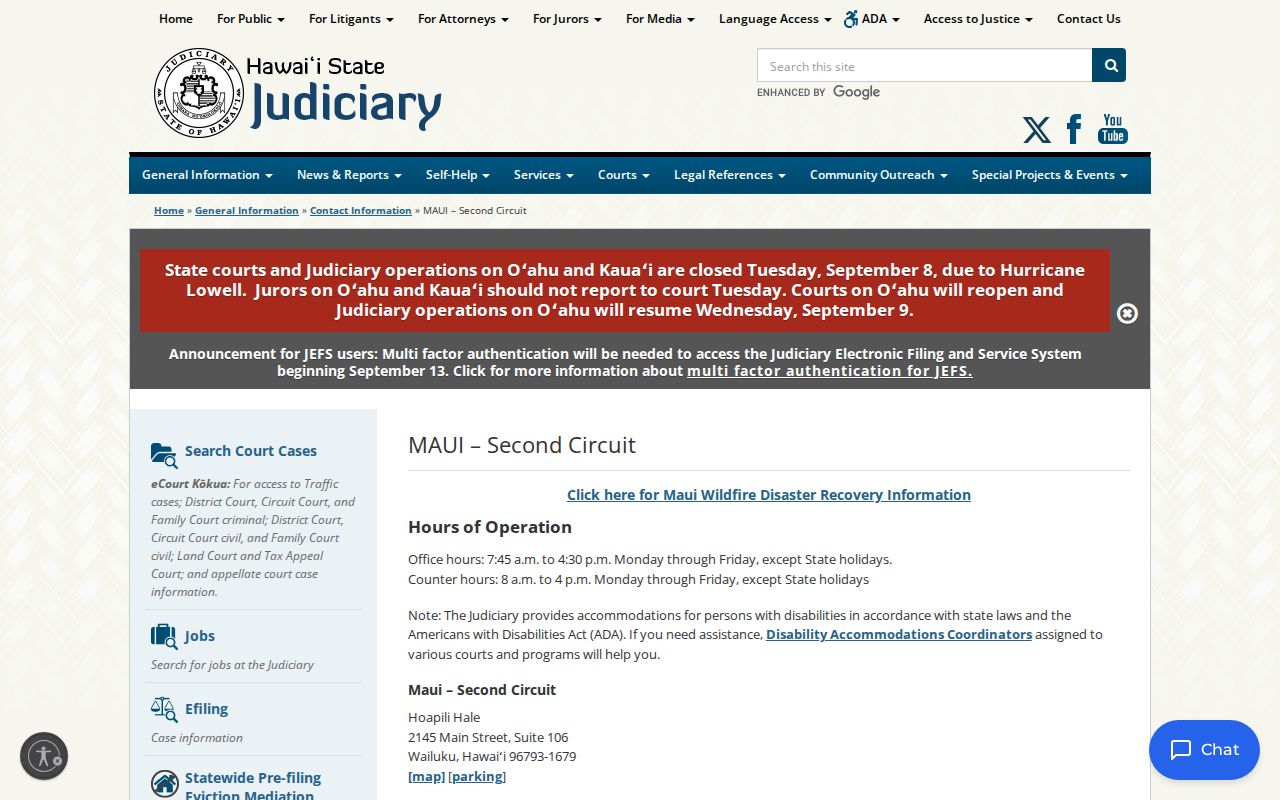
Older Kalawao County records live at the Wailuku branch, Hoapili Hale, 808-244-2969. Confirm hours first, because staffing and rural call routing change.
Kalawao County Warrant Roundups and Most-Wanted Lists
Kalawao County has no official most-wanted page. Maui Police post no most-wanted database and no public roundup roster. Maui Crime Stoppers takes tips, but it cannot check your personal warrant status. For a real status check, call the issuing court.
Key Point: The Maui Crime Stoppers program receives tips at 808-242-6966; it is not an active-warrant list.
Case-status questions belong with the Judiciary, and no tip by itself proves a warrant exists.
Federal warrants are separate. PACER can show public District of Hawaiʻi docket information, but sealed matters stay hidden. The U.S. Marshals fugitive task force takes tips and enforces. Kalawao County readers will not find a full public roster there.
Request a Kalawao County Warrant Status Record
Keep any Kalawao County records request narrow and specific. Ask for one person, not a list of every outstanding warrant. Give the legal name, a birth date if it fits, and any case or citation number you have. Add the date range, the issuing court, and the exact fields you want, such as issue date, warrant number, status, court, return, and disposition. For court files, forms 2D-P-332 and 2D-P-330 let you request inspection, a clerk search, selected documents, or copies. The Second Circuit fee schedule lists a $5 per-name search fee plus copy, certification, retrieval, and expedited charges. A search without a case number can take at least 10 business days. Confirm current terms before you file. For MPD or DLE records, the route is the Uniform Information Practices Act, HRS chapter 92F. UIPA permits search, review, and segregation fees, and it does not force release of sealed, private, or sensitive material. If that office does not hold the record, ask it to name the likely custodian of the Kalawao County warrant file.
When Your Name Is on the Warrant List
Kalawao County publishes no official public warrant list. Treat any claimed match as unverified until the issuing court confirms the case and its status. Do not go to a police station just because a caller or an unofficial site says a warrant exists. A lawyer can contact the court, review the file, and advise you on safe next steps. The paths a court controls include appearing as directed, voluntary surrender, posting bail or bond when allowed, and asking to recall or quash the warrant by motion. None of these is automatic. A clerk can explain filing and appearance logistics but cannot predict a ruling or give legal advice. The Kalawao County warrant records overview lays out the full court and sheriff route for anyone whose name surfaces this way.
Important: Consult a lawyer before appearing; an unresolved warrant may lead to arrest during contact with law enforcement.
Outstanding Warrant Scams in Kalawao County
Scammers love a gap, and Kalawao County has no simple public roster to check against. MPD and DLE warn of callers claiming an outstanding warrant or missed jury duty requires instant payment. The Judiciary has also warned about a 2026 traffic-citation text scam. Hang up. Skip the link. Find the official number yourself, and never send gift cards, cryptocurrency, or payment-app transfers. Molokaʻi District Court is 808-553-1100, the State Sheriff Division Maui Section is 808-244-2900, MPD Molokaʻi Station is 808-553-5355, and MPD non-emergency is 808-244-6400. Those offices may route a question rather than disclose warrant status by phone. The safe sequence: get the claimed court and case number, search official Judiciary information, verify with the clerk, and seek counsel if the warrant may be active. That separates a real court record from a demand aimed at your money or private information.